janome mod-30 vs mod-50: Which is better?
Both the janome mod-30 and mod-50 are suitable for making cool clothes, quilts, and things for your home, but, there is one key difference between them.
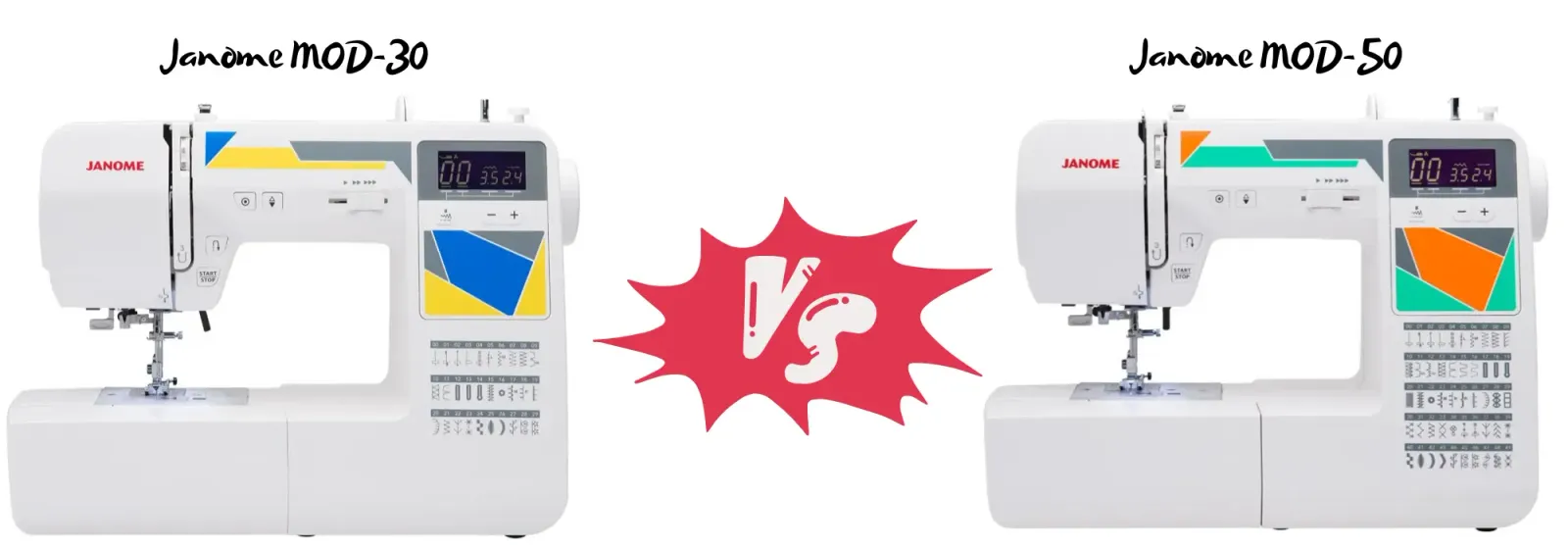
*janome mod-30 vs mod-50*
The Janome MOD machines are great for your next sewing project. They come in two types: computerized and mechanical.
The computerized machines (MOD 30, 50, 100, and 200) have new technology that makes sewing easier. You can use them to make cool clothes, quilts, and things for your home.
The mechanical machines (MOD 11, 15, and 19) are good for making colorful kids’ clothes and simple things for your house.
There’s also a special machine called the MOD-Serger. It’s perfect if you want to sew with stretchy fabrics or jeans.
All these machines help you sew with strength and skill. They’re great for people who love making things and want to get better at sewing.
janome mod-30 vs mod-50: Pricing
In general, the mod-50 is $50 more expensive than the mod-30, prices of both can be found here and here. But, mod-50 was reduced to $243 during black Friday last year. Which madeit the best option to get, lower price and more features. But that offer is now gone.
Make sure to signup to our newsletter to get the best deals straight into your mailbox. Click here to subscribe
janome mod-30 vs mod50: comparison table
| Feature | MOD-30 | MOD-50 |
|---|---|---|
| Hook Type | Top Loading Full Rotary Hook Bobbin | Top Loading Full Rotary Hook Bobbin |
| Thread Tension Control | Manual | Manual |
| Maximum Stitch Width | 7mm | 7mm |
| Feed System | 7 piece feed dog | 7 piece feed dog |
| Easy Reverse Button | Yes | Yes |
| Bobbin Winding | Auto-DeClutch | Auto-DeClutch |
| Stitch Selection | Backlit LCD screen with easy navigation keys | Backlit LCD screen with easy navigation keys |
| Dual Voltage 80v - 240v | Yes | No |
| Cover | Soft Dust Cover | Soft Dust Cover |
| Number of Stitches | 30 | 50 |
| Number of Buttonholes | 3 One-step buttonholes | 3 One-step buttonholes |
| Needle Threader | Built-In | Built-In |
| Needle Up Down | Up as default | Up as default |
| Free Arm | Yes | Yes |
| Drop Feed | Yes | Yes |
| Needle Position | 15 | 15 |
| Locking Stitch Button | Yes | Yes |
| Twin Needle Guard | No | No |
| Number of Stitch Combination | Not Available | Not Available |
| Last Stitch Recall Capability | No | No |
| Knee Lift | No | No |
| Machine Size | W 16” X H 12” X D 7” | W 16” X H 12” X D 7” |
| Machine Weight | 12.7 lbs | 12.7 lbs |
| Work Space | W 6.7” x H 4.3” | W 6.7” x H 4.3” |
| Extra High Presser Foot Lift | Yes | Yes |
| Foot Pressure Adjustment | No | No |
| Maximum Stitch Length | 5mm | 5mm |
| Other Features | Fashionable color scheme, easy to read front panel stitch chart | Fashionable color scheme, easy to read front panel stitch chart |
| Number of Designs | 0 | 0 |
| Fonts for Monogramming | 0 | 0 |
| Maximum Embroidery Size | ||
| Design Transfer Options | ||
| Embroidery Sewing Speeds | 0 | 0 |
| Embroidery Format | ||
| On Screen Editing Functions | ||
| Programmable Jump Thread Trimming | No | No |
| Adjustable Speed While Embroidering | No | No |
| Flexible Stitch Travelings | ||
| Auto Return Post Thread Break | No | No |
| Adjustable Hoop Positioning | No | No |
| Thread Brand Selection | ||
| Available Hoops |
janome mod-30 vs mod50: Extra stitches
One might ask, what are the stitches that are not available in the mod 30? That’s a very good question, and here 5 of those stiches that are only available in the mod-50.
-
Saddle Stitch: Common uses: Leatherwork, bookbinding, heavy-duty repairs This stitch is prized for its strength and durability. In leatherwork, it’s used for wallets, belts, and bags. In bookbinding, it creates long-lasting seams for hardcover books.
-
Knit Stitch: Common uses: Sweaters, scarves, blankets The knit stitch forms the basis of stockinette stitch when worked back and forth in rows. It’s used in nearly all knitted garments and accessories.
-
Double Overedge Stitch: Common uses: Finishing seams on woven fabrics, preventing fraying on cut edges This stitch is particularly useful for fabrics that fray easily, like linens or loosely woven cottons. It’s often used in garment construction before joining seams.
-
Attaching Elastic: Common uses: Waistbands, cuffs, underwear, gathered skirts The zigzag stitch used here allows the elastic to stretch without breaking the thread. It’s crucial for comfortable, well-fitting clothing items that need to stretch.
-
Darning Stitch: Common uses: Repairing holes in socks, sweaters, and other knitwear This technique can extend the life of beloved garments. It’s especially useful for mending small holes or worn areas in knitted items.
-
Cross Stitch: Common uses: Decorative wall hangings, pillowcases, bookmarks, clothing embellishments Cross stitch is popular for creating intricate patterns and pictures. It’s often used to make personalized gifts or home decor items.
-
Smocking: Common uses: Children’s dresses, decorative pillows, vintage-style clothing Smocking creates elasticity and decorative texture. It’s particularly popular in heirloom sewing and for creating gathered bodices on dresses.
-
French Knots: Common uses: Adding texture to embroidery, creating small details like eyes in animal designs, or stars in landscapes French knots are often used in combination with other embroidery stitches to add depth and detail to designs. They’re great for creating texture in hair, fur, or foliage in embroidered scenes